
18 March 2026, Zhigang Zhu, Paul Ranjard, first published by IAM
On 26 December 2025, the Supreme People's Court revoked an unfavourable decision made by the Beijing High Court against Puma and ordered the CNIPA to reconsider the invalidation request that it rejected.
Case background
Puma owns several well-known trademarks consisting of curved stripe designs placed on the side of athletic shoes. The mark first appeared in 1958 and has since been used and promoted worldwide, including in China. Puma obtained multiple trademark registrations in China for the stripe design on footwear, including registrations dating back to 1976, 1991 and 2007 (see Figures 1, 2 and 3).
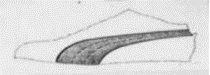
Figure 1. G426712 (1976)

Figure 2. G581191 (1991)
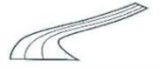
Figure 3. G925647 (2007)
At the beginning of 2010, a company called Do-win in the province of Jiangsu filed a design patent application for athletic shoes. The patented designs featured stripe-like graphics placed on the side of the shoe (see Figure 4).
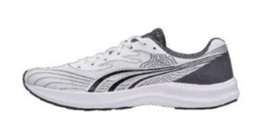
Figure 4. Do-win’s design
Puma opined that these stripe designs were visually similar to its well-known trademarks and filed invalidation requests at the CNIPA, arguing that the design patent violated Article 23(3) of the Chinese Patent Law, which prohibits the granting of design patents that conflict with prior rights of others.
The defendant argued that the disputed design patent constituted the legitimate use of a trademark (3016612) registered in 2004, which the defendant was authorised to use pursuant to a licence agreement (see Figure 5).
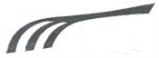
Figure 5. Trademark registered in 2004
The CNIPA found that the disputed design patent was more similar to the licensed trademark than to Puma’s trademarks and therefore rejected the invalidation request. Puma then brought an administrative lawsuit before the Beijing Intellectual Property Court. On 29 October 2024, the court dismissed Puma’s claims for the same reasons as the CNIPA – so Puma filed an appeal with the Supreme People’s Court.
Supreme People’s Court decision
On 26 December 2025, the Supreme People's Court revoked the Beijing IP Court’s decision and ordered the CNIPA to reconsider the invalidation request. In its decision, the court clarified how conflicts between prior trademarks and subsequent design patents should be assessed.
The court explained that in essence, it is necessary to assess whether the disputed design has been exploited in a manner that indicates the source of the products and therefore functions as a trademark.
The court noted that in the footwear industry, particularly for athletic shoes, it is common practice to place a graphic mark on the side of the shoe to indicate the product’s origin. The court found that the stripe design in the disputed patent was placed precisely in this position and occupied a prominent area of the shoe. It concluded that the design would likely be perceived by consumers as identifying the source of the goods and thus constituted trademark use.
The court then considered the similarity between the disputed design and Puma’s earlier trademarks. Both consisted of curved stripe patterns extending diagonally across the shoe and formed by multiple parallel lines. While certain details were different, such as line width and spacing, the overall visual impression remained highly similar. Given that the goods involved were identical – sports shoes – and that Puma’s mark had acquired strong distinctiveness and market recognition through long-term use and promotion, the court held that the disputed design was likely to cause consumers to misconstrue that the products originated from or were associated with Puma.
Finally, the court rejected the defendant’s argument based on its use under licence of the trademark registered in 2004.
It first examined whether the design implemented the registered trademark as is, or whether features of the said trademark had been substantively altered. In the process, the court found and analysed differences between the two (see Figure 6).
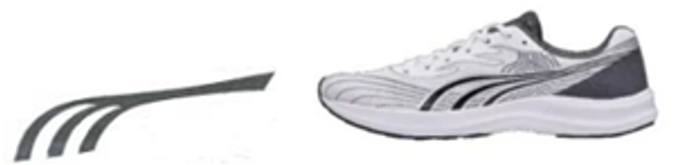
Figure 6. The licensed trademark versus the disputed design
One of these differences is that, in the trademark, the three lines merge in the middle to form one thick line – whereas in the design, the lines remain distinct and parallel, which, as the court noted, is a distinctive feature of Puma's trademarks.
The court thus found that the defence argument could not be supported because, in the process, the trademark’s distinctive features had been substantially altered.
Further, the court found that the design incorporated some distinctive features of Puma’s mark while deviating from that of the licensed mark. In addition, the design was used in essentially the same position and manner as that of Puma on athletic shoes. It concluded that the legitimate use defence could not be sustained.
Key takeaways
This case illustrates two situations, which are frequent and sometimes combined:
- a trademark owner discovers a later-registered similar trademark, which has remained unnoticed for more than five years; and
- a trademark owner discovers a registered trademark in the market that has become infringing due to some transformation of its appearance.
The transformed trademark is sometimes an older registered trademark that had never been used, has recently been purchased or taken under licence and is being exploited under its infringing new look, or, as in the present case, a subsequent trademark that has been registered for more than five years.
These situations can be extremely difficult to resolve as the holder of the contested trademark is in a very strong position.
First, pursuant to a 2008 Interpretation of the Supreme People's Court on the conflicts between registered trademarks and prior rights, it is not possible for a trademark holder to sue the holder of another registered trademark in court. The defending trademark must first be invalidated by the administrative authority.
Second, according to Article 45 of the Trademark Law, if a trademark has been registered for more than five years, it is impossible to request its invalidity unless the challenger can prove that its own trademark was well known when the contested mark was filed and that it was filed in bad faith.
However, when infringement could be attributed to a transformation of the trademark, a certain possibility of action is available.
According to Article 1 of the Interpretation, a civil action is possible if the contested trademark is being used in a way that substantially alters its distinctive features. Such an action may put an end to the infringing activities but cannot solve the problem posed by the mark’s existence.
The Supreme People’s Court provides an exception for cases involving the transformation of a registered trademark, but this does not exist in the Trademark Law.
Article 49 of the current law provides that where a trademark is unilaterally altered, the trademark office shall issue an order to rectify, possibly a fine and eventually a decision to revoke it. However, when a trademark infringes upon another party’s rights as a result of alteration, this party has no right to request the mark’s revocation. This constitutes a shortcoming in the law.
Finding a trademark that is free from invalidation and sufficiently close to a target mark so that a simple transformation makes it quite similar is the ultimate demonstration of malice and bad faith. And yet, no action is available.
This loophole has been flagged on various occasions in comments made to revision drafts of the law. The latest draft, issued in December 2025 (Article 56), does not seem to consider the possibility of revocation upon request when a registered trademark is transformed and becomes infringing as a result.